Las Vegas Strip
A neon corridor where every resort is a rival
Nations 34














The Geography
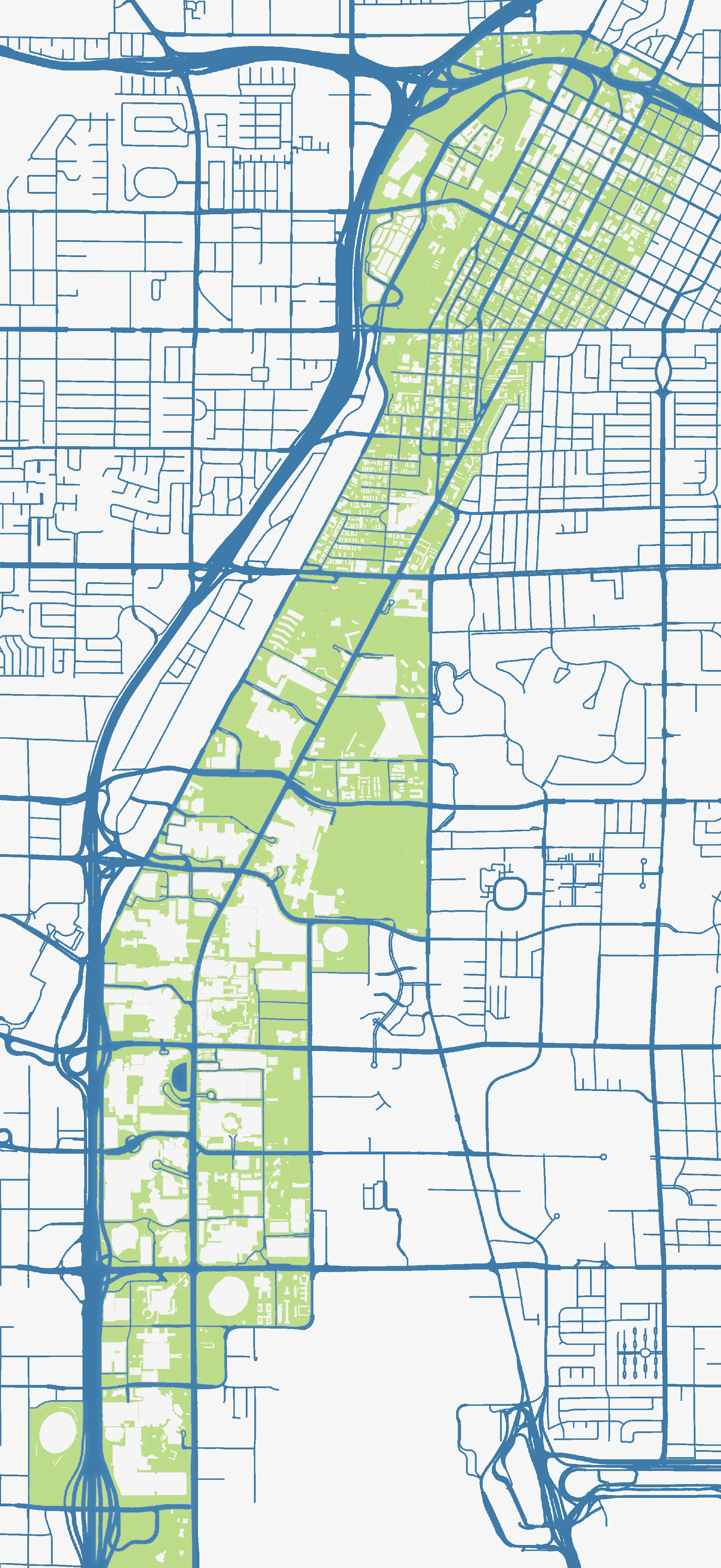
Las Vegas Strip is a long urban corridor in the Mojave Desert, built around a chain of resorts, casinos, convention venues, shopping districts, and sports grounds. The map stretches from Downtown Las Vegas and Fremont Street in the north to the Fabulous Las Vegas Sign and the stadium district in the south, with the Strip’s famous hotels packed between them.
This is an unusually recognizable battlefield. The named nations turn individual landmarks into strongholds: Sahara, Circus Circus, Resorts World, Wynn, Venetian, Caesars Palace, Bellagio, Paris, MGM Grand, Luxor, and Mandalay Bay all form a dense north-south sequence. Side locations such as Arts District, the Convention Center, and the airport-side landmarks create alternate approaches rather than leaving the corridor as a single road.
The History
A railway town becomes a resort city
Las Vegas grew from a desert settlement and railway stop into a service and entertainment center. Its springs, transport links, and position between larger western cities gave the town a practical foundation before the resort skyline arrived.
The Strip takes shape
The resort corridor developed south of the original downtown, turning isolated desert frontage into a continuous tourist district. Distinctive themes, large hotels, and casino competition made the Strip a city within the city.
A capital of spectacle
Las Vegas expanded beyond gambling into conventions, concerts, restaurants, shopping, and professional sports. That layered identity is reflected in the map’s mix of hotels, arenas, malls, museums, and older downtown casinos.
The Battlefield
Terrain Overview
The map is a north-south race through a dense chain of urban positions. The central Strip has the greatest concentration of landmarks, while Downtown and Fremont Street form a separate northern cluster and the stadium, sign, and airport-side positions anchor the south. Because many strongholds sit close together, a successful early push can quickly become a dangerous overextension.
Best Spawns
- Central Strip — immediate access to several neighboring resorts and the densest set of expansion options.
- Downtown / Fremont Street — a northern anchor with routes toward the Arts District, Convention Center, and Strip.
- MGM Grand–Mandalay Bay corridor — a southern launch point with access to the stadium side and the resort chain.
Avoid
- Extreme southern edge — room to grow, but many decisive contests are farther up the corridor.
- A single resort surrounded by rivals — valuable landmarks can become traps when every neighboring position is hostile.
- Detached side venues — useful for flanking, but risky if they leave the main corridor undefended.
Strategic Insights
Treat the Strip as a connected chain, not a collection of isolated casinos. Secure a compact group of positions first, then use side districts to attack the next link in the chain. The central landmarks are tempting prizes, but holding both ends of the corridor can be more important than grabbing one famous resort.
In larger lobbies, a northern player and a southern player can expand toward the same central hotels from opposite directions. Watch the side approaches around the Arts District, Convention Center, stadium, and shopping complexes: they are the routes that turn a straight-line contest into an encirclement.
Fun Facts
- The map includes both the modern Strip and the older Downtown/Fremont Street district.
- Several resorts carry deliberately themed flags, matching the theatrical identities of places such as Paris, Venetian, Bellagio, and Luxor.
- The Sphere, Allegiant Stadium, and T-Mobile Arena show how Las Vegas has grown into a major venue city beyond its casinos.