Great Lakes
Freshwater seas in the middle of a continent
Nations 34









The Geography
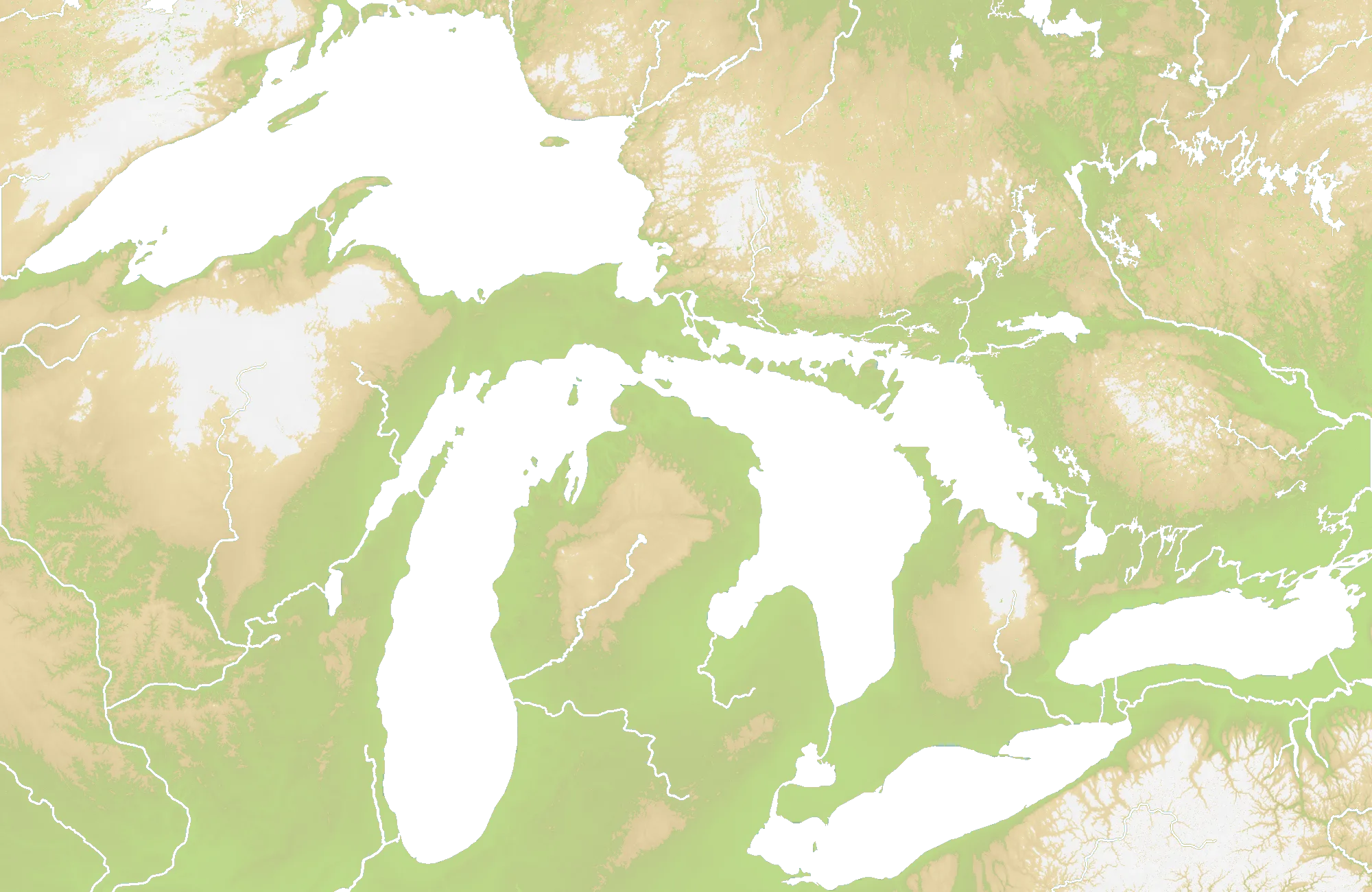
Great Lakes centers on the enormous freshwater system between the United States and Canada. The map is 2000x1300 with 74.5% land and 25.5% water, which means the lakes are not the majority of the board, but they dominate its structure. They split movement, create coastal arcs, and turn the middle of North America into a chain of chokepoints.
The five Great Lakes act like inland seas. Superior, Michigan, Huron, Erie, and Ontario are barriers, highways, and objectives all at once. Around them sit dense industrial corridors, forests, plains, and border cities.
The History
Indigenous Trade Networks
Long before modern borders, Indigenous nations used the lakes and rivers as trade and travel corridors. Canoe routes linked the interior of the continent to the Atlantic world.
17th-18th Centuries - French, British, and Native Power
The Great Lakes became a central arena of fur trade, alliance politics, and imperial rivalry between France, Britain, and Native nations.
19th-20th Centuries - Industry and Inland Shipping
Canals, steel, cars, grain, and ore made the region one of North America’s major industrial systems. Water transport helped bind the interior to global markets.
The Battlefield
Terrain Overview
Great Lakes has 34 nations and a strong land majority. The lakes are not empty space; they are the map’s traffic control system.
Best Spawns
- Lake junctions and straits - strong leverage over movement between basins.
- Southern industrial corridor - dense expansion with many routes.
- Northern lake edges - safer flanks with good defensive geography.
Avoid
- Being trapped against a lake - water protects one side but limits retreat.
- Ignoring crossings - a rival who controls the lake chain can bypass your best land front.
Strategic Insights
Great Lakes rewards players who use water defensively before using it offensively. Secure a land base, lock a few crossings, then turn the lakes into a way to choose where the next front opens.
Fun Facts
- The Great Lakes contain about one fifth of the world’s surface fresh water.
- The St. Lawrence system connects the lakes to the Atlantic Ocean.
- The map is one of the land-heaviest additions in this upstream sync.