Alps
Europe's wall of rock and passes
Nations 30





The Geography
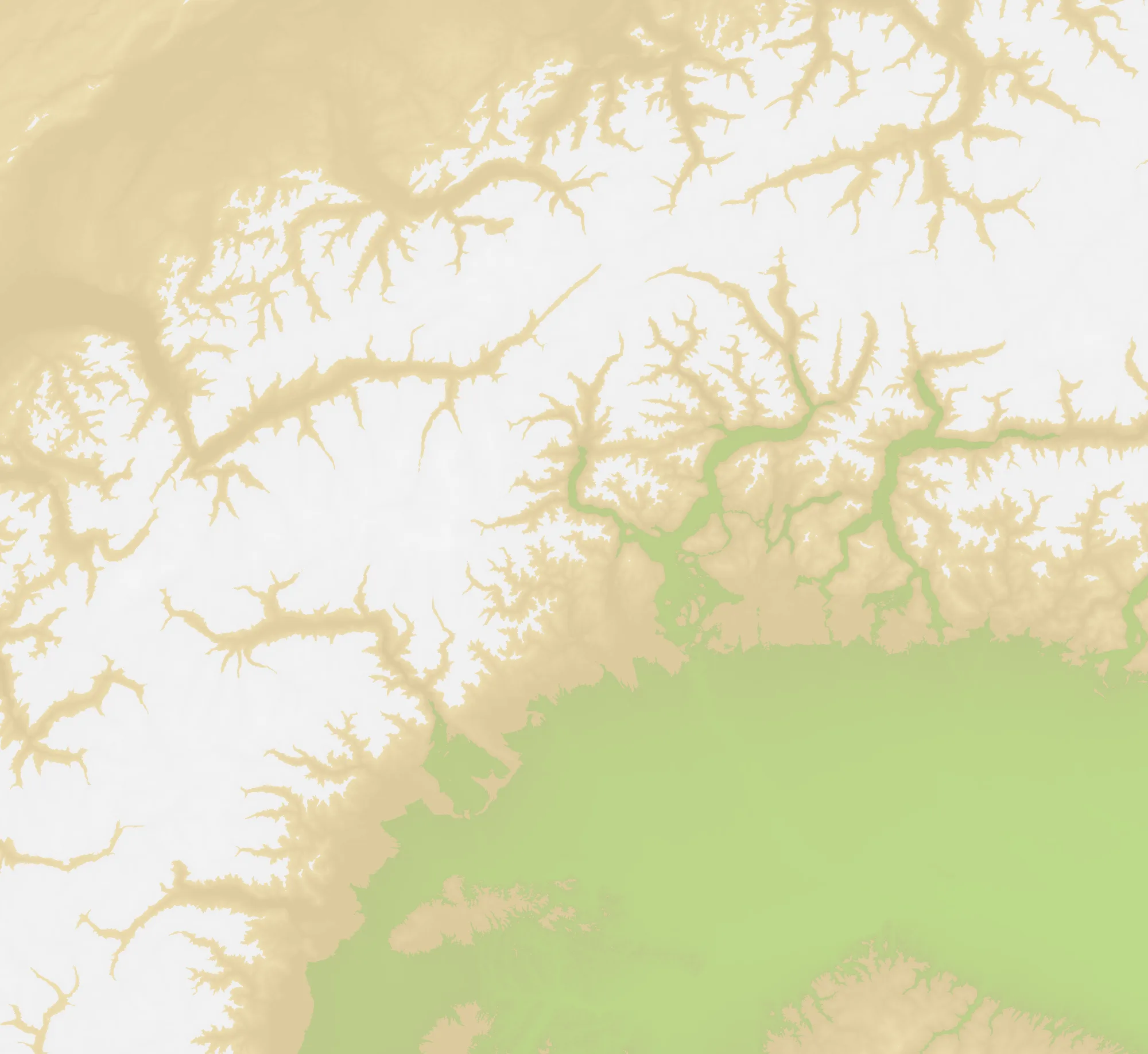
The Alps are Europe’s most famous mountain system: a great arc of uplift stretching from southeastern France across Switzerland, northern Italy, southern Germany, Liechtenstein, Austria, and into Slovenia. They were born from the collision of the African and Eurasian tectonic plates, and they still dominate central Europe as a belt of ridges, valleys, glaciers, and high passes. The OpenFront Alps map spans that arc in a 2000×1836 frame, broad enough to show the range as a connected mountain world rather than a single border.
Unlike most regional maps, Alps is 100% land. There are no coastal escapes, no islands, and no naval shortcuts — just elevation, chokepoints, and the long logic of valley systems. That makes it unusually pure as a terrain map: the Rhône valley, Swiss plateau approaches, Brenner corridor, and Po-facing passes all matter because every advance has to move through or around rock.
Thirty nations appear here, creating a busy opening even on a map this mountainous. The Alps still offer room to build a defensible alpine core, but the dense starting field makes the major passes contested from the beginning. Once an enemy secures the pass network into your valley, there is nowhere to retreat except deeper into the mountains.
The History
218 BCE — Hannibal Crosses the Alps
During the Second Punic War, Hannibal brought an army — including war elephants — across the Alps into Italy. The crossing stunned Rome and became one of military history’s great feats of endurance, proving that even Europe’s harshest mountains could be forced by an audacious commander.
15 BCE — Rome Secures the Alpine Passes
Under Augustus, Rome conquered the Alpine tribes and absorbed the major passes into imperial infrastructure. That mattered enormously: the Alps stopped being only a barrier and became a system of controlled routes connecting Italy to Gaul, Raetia, and the Danube frontier.
1800 — Napoleon Crosses the Great St Bernard Pass
Napoleon’s Alpine campaign against Austria revived the old strategic lesson that passes decide empires. His movement over the mountains into northern Italy remains a classic example of using unexpected terrain routes for operational surprise.
1915–1918 — World War I in the High Mountains
Italy and Austria-Hungary fought some of the war’s most brutal campaigns in the Alps, including glacier warfare, tunneling, avalanches, and artillery duels at extreme altitude. The front showed how mountains can turn every ridge into a fortress and every supply line into a life-or-death problem.
The Battlefield
Terrain Overview
Alps is all about pass control. The mountains themselves are protective, but they also divide the map into pockets linked by a limited number of transit corridors. Whoever controls the major east-west valleys and north-south passes can shift forces efficiently; whoever does not is stuck defending isolated basins one at a time.
Best Spawns
- Swiss central corridor — access to multiple pass systems, strong defensive terrain, and the map’s most flexible interior position
- Northern Italian foothills — easier early expansion than the high alpine core and good control over routes into France, Switzerland, and Austria
- Austrian pass approaches — defensible ground with several outward attack lines if you secure the valleys quickly
Avoid
- Deep high-alpine cul-de-sacs — defensible at first, but poor for expansion and easy to bottle up
- Extreme western or eastern edge valleys — fewer strategic options if a stronger neighbor locks the nearest pass
Strategic Insights
Because the map is 100% land, there is no alternate route around a blocked front. Terrain is destiny here. Strong play means thinking like an engineer as much as a general: hold the pass mouths, build depth behind them, and never overextend into a valley you cannot reinforce. Alps rewards patient consolidation more than flashy aggression.
Fun Facts
- Alps is one of the rare OpenFront maps with absolutely no water — not even a sea lane as a strategic wildcard
- With 30 nations, it is roughly as crowded as Aegean and less crowded than Arctic, making the mountain chokepoints contested without becoming pure chaos
- The real Alps contain some of Europe’s most famous tunnels and passes, and the map captures that same idea: movement matters more than raw area