Pluto
Cold worlds, hot wars, thin horizons
Nations 16










The Map
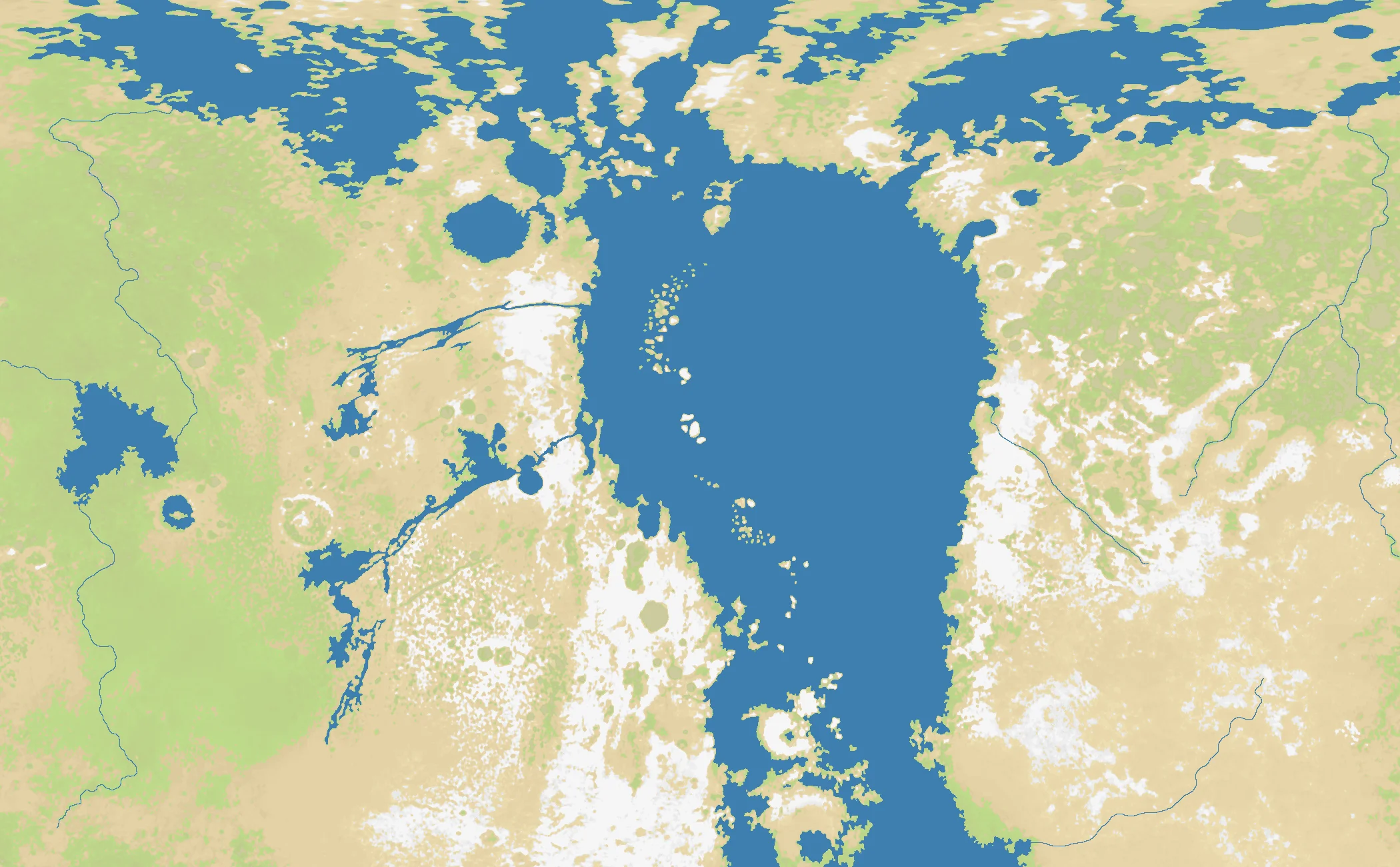
Pluto looks frozen, distant, and abandoned, but it does not play passive. Its 2100×1300 frame and unusually high 73% land make it one of the most land-dominant fantasy maps in the roster, even though its theme suggests isolation and icebound separation. The terrain feels like a dwarf planet cracked by ancient impacts: fractured plateaus, hard-edged continents, and frozen channels that divide space without fully surrendering the map to naval play.
That contrast is what gives Pluto its personality. The atmosphere says desolation, yet the numbers say contact. Nations can secure room to grow on land, but those growth paths are often interrupted by icy cuts and awkward inlets that force detours or create exposed crossing points. The result is a map where players constantly judge whether to finish a land campaign the long way or risk a shorter, sharper crossing through hostile water.
The Battlefield
Terrain Overview
Pluto’s terrain is broad enough to support regional campaigns, but broken enough to stop any single front from feeling smooth. Most nations can establish a land base early, then pivot toward narrow crossings that function like frozen straits. Because there is so much land overall, land income and border discipline usually decide the midgame, while naval presence acts more like a precision tool than a full identity.
Best Spawns
- Large interior land shelves — These starts offer the safest opening economies and let you build momentum before contesting channels.
- Peninsulas with one clean backline — A defended rear and one or two obvious approaches make it easier to turn Pluto’s fractured geometry into layered defense.
- Channel-adjacent high land clusters — These positions are strong if you can control the crossing, because they combine expansion room with striking access.
Avoid
- Tiny isolated fragments — Small broken landmasses feel thematic, but they can strand your growth and force premature naval risk.
- Multi-channel crossroads — A nation watching several frozen passages at once can get pulled apart by faster opponents.
- Overcommitting to fleets — Pluto has water, but 73% land means armies usually pay off better unless a crossing is truly decisive.
Strategic Insights
Pluto favors players who can distinguish between structural terrain and cosmetic terrain. Not every icy gap deserves ships, and not every land route deserves patience. The strongest approach is usually to secure a dense land core, identify the one crossing that actually changes the map, and make that crossing matter. If you fight everywhere, Pluto will stretch you thin; if you choose one seam and tear it open, the whole planet suddenly feels much smaller.
Fun Facts
- Pluto ties Passage for the highest nation count in this set with 16 players, but its 73% land gives it a completely different pacing and far more room for regional consolidation.
- It is the most land-heavy fantasy map in this batch, far above Svalmel’s 38% and Surrounded’s 20%.
- At 2100×1300, Pluto is substantially larger than the 1500×1500 tournament maps, yet it often resolves through a few key crossings instead of total frontier chaos.