Lemnos
Aegean outpost beside the world's gateway
Nations 9
The Geography
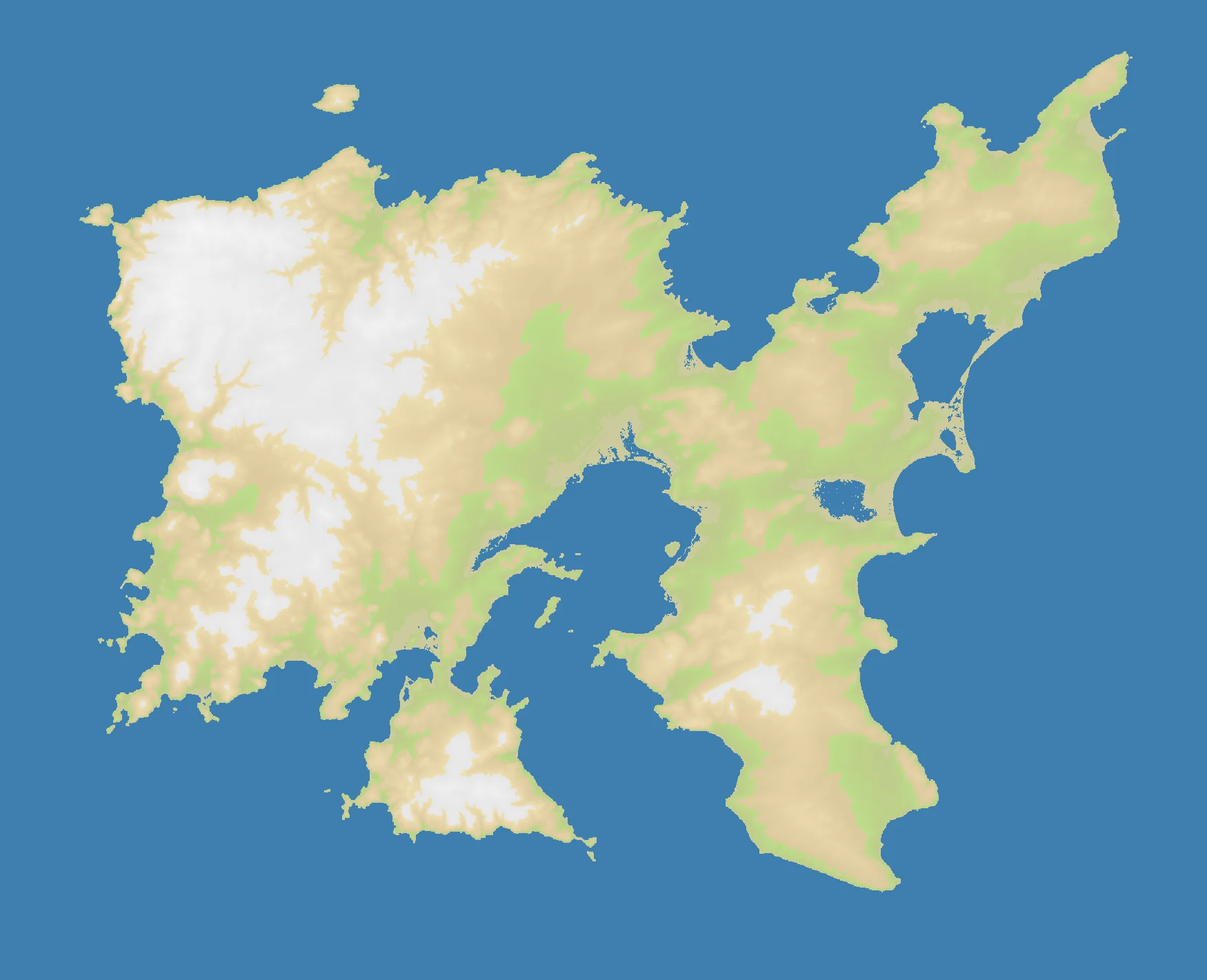
Lemnos lies in the northern Aegean, just west of the Dardanelles — the narrow waterway that links the Aegean to the Sea of Marmara and, beyond that, to the Black Sea. The OpenFront map (1748×1420) includes the island itself and the surrounding waters, with land at 35% and sea at 65%. That ratio gives Lemnos a distinct personality: it is not a tiny island duel, but a maritime control map anchored by one strategically placed landmass.
The island is relatively low and open compared with the sharper mountains of other Aegean islands. Its broad bays, especially Moudros Bay, have made it valuable as an anchorage, while the nearby sea lanes create a constant sense of exposure. Whoever sits on Lemnos is close enough to project force toward the straits, but also close enough to attract attention from every direction.
Geographically, this is a map about thresholds. Lemnos is not the destination; it is the door beside the door, the staging ground from which larger campaigns begin.
The History
Mythic Age — Hephaestus and the Forge
In Greek mythology, Lemnos was associated with Hephaestus, god of fire and metalworking, who was said to have landed here after being cast from Olympus. The island’s volcanic associations and smithing legends gave it an outsized place in the Greek imagination.
5th Century BCE — Athenian Sea Power
During the classical era, Athens valued Lemnos as part of its northern Aegean network. Holding the island helped secure grain routes and naval movement between the Aegean and the straits.
1915 — Base for the Gallipoli Campaign
In the First World War, the Allied fleet used Moudros on Lemnos as a major base for operations against Gallipoli and the Dardanelles. The island’s position made it the natural forward platform for one of the war’s most famous failed amphibious campaigns.
20th–21st Centuries — Aegean Watchpost
Modern Lemnos remains important because it sits near one of the busiest and most politically sensitive waterways in the eastern Mediterranean. It is a reminder that islands do not have to be large to matter enormously.
The Battlefield
Terrain Overview
Lemnos is centered on one controlling island surrounded by maneuver water. The island offers a solid base, but the real fight is over who can use it to dominate the surrounding approaches.
Best Spawns
- Central Lemnos — best access to the island’s interior and easiest pivot to any coastline
- Moudros-facing coast — strong naval launch point with quick access to the map’s most important waters
- Western sea approach — safer buildup position that can strike the island or the strait routes later
Avoid
- Isolated peripheral waters — too passive early, and often surrendered to whoever already holds Lemnos proper
- Narrow coastal pockets on the island edge — easy to box in before expansion gets moving
Strategic Insights
This is a staging-ground map. Control of Lemnos itself is powerful, but only if converted into sea denial; otherwise the island becomes a besieged citadel surrounded by hostile fleets.
Fun Facts
- Moudros Bay is one of the largest natural harbors in Greece
- Lemnos sits near the entrance to the Dardanelles, one of the most strategically important straits on Earth
- In Greek myth, the island was linked to Hephaestus, the god of fire and the forge